
New Supply Offers : June 2026
TFO Canada received 17 new supply offers in these categories:
- 12 – Food products and Beverages (including Seafood)
- 2 – Home Décor, Giftware and Crafts
- 1 – Textiles
- 1 – Fashion Accessories
- 1 – Industrial Goods, Machinery, Parts and Raw Materials
Sign in to your TFO Canada profile to view the suppliers that match your interests.
B2B Meeting Opportunity: Coffee, Premium Chocolates & Cocoa from the Philippines

One of TFO Canada’s Associates recently visited Manila and Davao to meet with a select group of niche producers of responsibly sourced coffee, chocolates, and cocoa products from the Philippines. The objective was to introduce these high‑quality small enterprises to the Canadian market.
These producers have already exported successfully to the United States, the European Union, and several Asian markets, but none have exported to Canada to date. Several have received international awards recognizing the quality of their products, and all follow responsible sourcing practices.
Interested in meeting these producers? — B2B meetings will be organized in July and August 2026, offering Canadian buyers the opportunity to hold initial discussions with them.
Contact — For more information, please contact Marc Germain (Montreal):
- ✉️Email : [email protected]
- 📞 Phone: +1 514 995 5011.
🌍 TFO Canada in Action | Vietnam
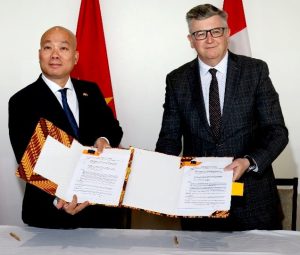
TFO Canada has signed an implementation agreement under TRISEG (Trade for Resilient, Inclusive and Sustainable Economic Growth) with the Vietnam Trade Promotion Agency (VIETRADE) to support inclusive and sustainable trade growth in Vietnam. The initiative strengthens trade support institutions and helps SMEs—particularly women‑led and under‑represented businesses—access Canadian and international markets, contributing to more resilient and efficient supply chains.
The agreement was signed on June 5, 2026, in Ottawa, at the offices of Global Affairs Canada.
🔗 Read more: TFO Canada and VIETRADE sign TRISEG implementation agreement
🛂 Market Insight: Trade Facilitation — Faster Borders, Lower Costs
Trade facilitation measures play a critical role in reducing delays, costs, and uncertainty in cross‑border trade. During the 2026 review of the WTO Trade Facilitation Agreement (TFA), members discussed proposals aimed at improving customs procedures, transparency, digitalization, and implementation support—particularly in developing countries that supply global markets.
More effective implementation of trade facilitation commitments can improve the predictability and efficiency of import processes, supporting smoother supply chains and more reliable sourcing for businesses operating internationally.
Implications for Importers
- Streamlined and more transparent customs procedures can reduce clearance times and administrative burdens.
- Greater digitalization at borders may lower compliance risks and documentation errors.
- Improved implementation in supplier countries can enhance delivery reliability and supply chain resilience.
- Tracking trade facilitation developments helps importers anticipate procedural changes that may affect costs and timelines.
🔗 Learn more:
👉 WTO | Trade Facilitation Agreement 2026 Review
🌏 AI Is Reshaping Trade Facilitation in Asia and the Pacific
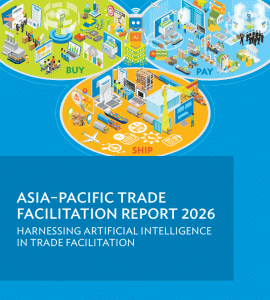
Trade facilitation is entering a new phase as artificial intelligence (AI) increasingly reshapes global trade processes. The Asia‑Pacific Trade Facilitation Report 2026 examines how AI is being applied across the trade value chain in Asia and the Pacific—from trade documentation and customs procedures to risk management and compliance—while highlighting varying levels of adoption across economies. The report also identifies key barriers and challenges, and outlines policy priorities for leveraging AI‑driven digitalization to support more efficient, resilient, and adaptive trade facilitation systems.
Why It Matters for Canadian Importers
- AI‑enabled customs and border processes may reduce clearance times and administrative burdens in markets adopting these technologies.
- Differences in adoption levels across countries mean import procedures and documentation requirements may continue to vary by market.
- Greater automation and risk‑based controls can improve predictability but may require higher data accuracy and compliance from traders.
- Ongoing digital trade facilitation reforms could improve sourcing efficiency over time, particularly in economies investing in customs modernization.
🔗 Further reading: Asia-Pacific Trade Facilitation Report 2026: Harnessing Artificial Intelligence in Trade Facilitation | Asian Development Bank
Trade Events
In Canada
APPAREL TEXTILE SOURCING (ATS) TORONTO 2026
September 23-25, 2026
APPAREL TEXTILE SOURCING (ATS) MONTREAL 2026
September 28, 2026
September 25-27, 2026
Internationally
Textile Asia International Exhibitions & Conferences 2026-LAHORE EDITION
July 4-6, 2026
Textile Asia International Exhibitions & Conferences 2026-SIALKOT EDITION
July 9-11, 2026
Costa Rica Trade & Investment Summit 2026
September 1-4, 2026
Click here to view all trade events