
New Supply Offers : May 2026
TFO Canada received 4 new supply offers in these categories:
- 2 – Food products and Beverages (including Seafood)
- 2 – IT Services (including Software)
Sign in to your TFO Canada profile to view the suppliers that match your interests.
☕ Trade Opportunity: Global Coffee Expo Canada 2026
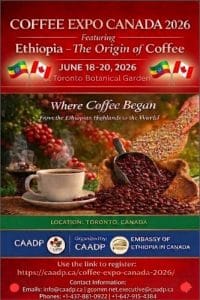
- Dates: June 18-20, 2026
- Venue: Toronto Botanical Garden
The Global Coffee Expo Canada 2026 will bring together coffee producers, exporters, buyers, and industry stakeholders to support origin‑based sourcing and buyer–supplier engagement. The event offers Canadian importers a practical opportunity to connect directly with international coffee suppliers, explore new sourcing origins, and engage in in‑person business meetings.
🔗 Learn more: Global Coffee Expo Canada 2026
🛂 Market Insight: Rules of Origin — More Than a Label
Rules of origin play a critical role in determining whether imported products qualify for preferential tariff treatment under free trade agreements, including Canada’s preferential Tariff regimes such as the General Preferential Tariff (GPT) and the Least Developed Country Tariff (LDCT). As highlighted by the World Trade Organization, meeting rules of origin requirements goes beyond labeling—it involves understanding product composition, sourcing thresholds, and documentation requirements that can significantly affect duty rates and market access.
Tools such as FindRulesofOrigin.org help businesses navigate these requirements by clarifying applicable rules across different trade agreements and product categories, supporting more informed sourcing and compliance decisions.
Implications for Importers
- Incorrect or incomplete origin claims can result in loss of tariff preferences, penalties, or shipment delays.
- Complex supply chains increase the importance of understanding how inputs and processing affect origin eligibility.
- Early verification of rules of origin can help optimize sourcing strategies and landed costs.
- Using digital tools to check origin requirements supports compliance, documentation accuracy, and risk management.
🔗 Learn more: Find Rules of Origin Facilitator
🌏 Market Insight: Invisible Barriers in Global Trade
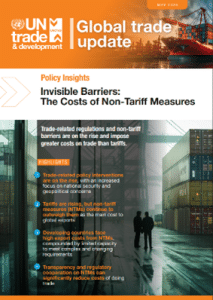
A recent UNCTAD Global Trade Update (May 2026) highlights how “invisible barriers” — including non‑tariff measures, regulatory requirements, sustainability standards, and conformity assessments — are increasingly shaping global trade flows. While tariffs remain relatively stable, these behind‑the‑border requirements are adding significant compliance costs and complexity, particularly for suppliers in developing markets. As a result, sourcing decisions, timelines, and landed costs are being affected across multiple agri‑food and consumer product supply chains.
Implications for Importers
- Higher compliance and verification costs may affect supplier pricing, lead times, and contract terms.
- Greater variability in supplier readiness could increase risks related to delivery reliability and consistency.
- Stricter regulatory and sustainability requirements reinforce the importance of due diligence, documentation, and traceability.
- Early engagement with suppliers on compliance, certification, and standards alignment can help mitigate future cost, operational, and reputational risks.
🔗 Further reading: UNCTAD – Global Trade Update (May 2026): Invisible Barriers and the Costs of Non‑Tariff Measures
🌏 Market Context: Global Value Chains Are Shifting
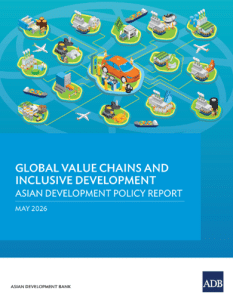
A recent Asian Development Bank (ADB) report highlights that global value chains continue to support economic growth across Asia and the Pacific, but with uneven gains across countries. The report notes that increasing fragmentation of supply chains—driven by geopolitical tensions, climate‑related disruptions, and changing trade patterns—is affecting how economies participate in and benefit from global production networks.
Why It Matters for Canadian Importers
- Supply chain fragmentation may contribute to greater variability in sourcing conditions across Asia and the Pacific.
- Climate‑ and geopolitics‑related disruptions can affect production reliability and continuity in some markets.
- Uneven participation in value chains suggests differing supplier capacities and readiness across countries.
- Resilience and upgrading efforts in some economies may create new sourcing opportunities over time.
🔗 Further reading: Global Value Chains Boost Regional Growth, but Gains Are Uneven in Asia and the Pacific | Asian Development Bank
Trade Events
In Canada
GLOBAL COFFEE EXPO CANADA 2026
June 18-20, 2026
November 18-20, 2026
Internationally
June 9-11, 2026
June 18-21, 2026
Click here to view all trade event