
New Supply Offers : September 2026
TFO Canada received 46 new supply offers in these categories:
- 26 – Food products and Beverages (including Seafood)
- 9 – Clothing (not including Footwear)
- 2 – Personal Care, Pharmaceuticals and Natural Health Products
- 7 – Home Décor, Giftware and Crafts
- 2 – Fashion Accessories
Sign in to your TFO Canada profile to view the suppliers that match your interests.
CBSA Updates Its Guide to Importing Commercial Goods into Canada
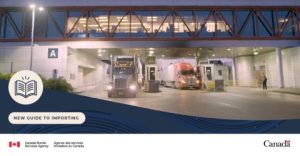 Source Photo: LinkedIn Post
The Canada Border Services Agency (CBSA) has updated its Guide to importing commercial goods into Canada, a step-by-step resource for new and occasional importers, small and medium-sized businesses and customs brokers. It follows the full import journey: gathering information about your goods, selecting the duties and taxes that apply, registering your business in the CBSA Assessment and Revenue Management (CARM) Client Portal, shipping and reporting goods, obtaining release and making changes after accounting. The guide also highlights practical CARM tools in the CARM Client Portal, such as a tariff classification tool and a Duties and Taxes Calculator, and includes a checklist of key steps.
Why It Matters for Canadian Importers and Buyers
- Goods from countries with a trade agreement, such as Peru or Colombia, or CPTPP members, may qualify for lower duties if importers hold proof of origin.
- The Duties and Taxes Calculator helps importers estimate landed costs before placing an order.
- Goods made with forced or prison labour are prohibited, and importers are responsible for supply chain due diligence.
- Using the checklist before placing an order can help avoid border delays and reassessments.
🔗 Learn more: Guide to importing commercial goods into Canada
Canada Advances Trade Talks with India on a Comprehensive Economic Partnership Agreement

Source Photo: LinkedIn Post
Minister of International Trade Maninder Sidhu met India’s Minister of Commerce and Industry Piyush Goyal in Mumbai to advance a Canada-India Comprehensive Economic Partnership Agreement (CEPA). Four rounds of negotiations have been completed, and both countries aim to conclude the agreement by the end of 2026 and double two-way trade to $70 billion annually by 2030. In 2025, two-way merchandise trade reached $13.6 billion, with Canada importing $9.7 billion in goods from India, mainly precious stones and metals, machinery and pharmaceutical products. The Minister will also lead a Team Canada Trade Mission to India next month.
Why It Matters for Canadian Importers and Buyers
- A concluded CEPA could reduce tariffs and non-tariff barriers on goods imported from India.
- India is already a significant supplier to Canada, and preferential access could make Indian products more competitive.
- Importers should monitor negotiations for product-specific outcomes, including rules of origin.
- Growing bilateral engagement may open new sourcing and supplier diversification opportunities.
🔗 Learn more: Canada advances trade talks on comprehensive economic partnership agreement with India – Canada.ca
Canada Strengthens Trade and Investment Ties with ASEAN
 Source Photo: LinkedIn Post
At the Fifteenth ASEAN Economic Ministers–Canada Meeting in Manila, Minister Sidhu advanced negotiations toward free trade agreements with both the Association of Southeast Asian Nations (ASEAN) and the Philippines. Trade with the region is growing quickly: Canada-ASEAN merchandise trade reached $52.5 billion in 2025, up 23.7% from 2024, and the Philippines, the 2026 ASEAN chair, is Canada’s fifth-largest merchandise trading partner in Southeast Asia ($3.4 billion). Canada also announced $280,000 through the ASEAN-Canada Plan of Action Trust Fund to support micro, small and medium enterprise (MSME) development across the region.
Why It Matters for Canadian Importers and Buyers
- ASEAN is one of the world’s fastest-growing regional markets and an important sourcing region for Canadian importers.
- Future FTAs could lower tariffs and simplify procedures for goods from Southeast Asia.
- Support for MSMEs in the region may strengthen the base of smaller suppliers able to serve the Canadian market.
- Importers diversifying their supply chains may wish to follow negotiations closely.
🔗 Learn more: Minister Sidhu strengthens Canada’s trade and investment ties with Association of Southeast Asian Nations – Canada.ca
What Canada’s State of Trade 2026 Report Tells Us
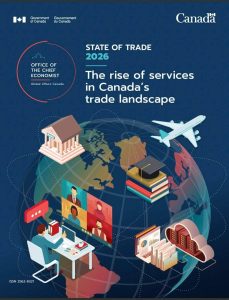 Source Photo: Government of Canada
Global Affairs Canada’s State of Trade 2026 report looks at how Canada’s trade performed in a year marked by the highest U.S. tariffs since the 1970s, with an estimated 11% of world merchandise trade affected by tariffs. Despite these challenges, global trade kept growing, driven largely by demand for AI-related goods. Canada’s exports to non-U.S. markets rose 11.1%, reaching their highest share since 1981, while services exports hit a record $240 billion and foreign direct investment reached $93 billion, the highest level in more than a decade.
Why It Matters for Canadian Importers and Buyers:
- Canada’s push to diversify its trade is strengthening ties with Europe, the Indo-Pacific and the United Kingdom, which may open new sourcing opportunities.
- Canadian imports of consumer goods grew 4.6% in 2025, led by food products (+10.1%) and clothing, footwear and accessories (+9.0%).
- New trading links across Asia, Europe and Latin America show how diversifying suppliers can help businesses stay resilient.
- With tariffs affecting a growing share of global trade, importers should regularly review their supply chains and landed costs.
🔗 Learn more: Navigating new currents: What Canada’s State of Trade 2026 report tells us
📖 Read the report: State of Trade 2026: The rise of services in Canada’s trade landscape
Canadian Surtaxes on Certain U.S.-Origin Goods (Customs Notice 26-23)
The Canada Border Services Agency (CBSA) has issued Customs Notice 26-23 on the United States Surtax Order (2026). Since September 8, 2026, certain goods originating in the United States are subject to a surtax of 15%, 25% or 50% of their value for duty, in addition to any other duties owing. The measure is Canada’s response to U.S. Section 338 tariffs on Canadian goods. The affected products are drawn from those targeted by U.S. Section 338 and Section 232 tariffs, with each surtax rate generally matching the corresponding U.S. tariff. The complete list of goods and rates is set out in the Schedules to the Order.
Why It Matters for Canadian Importers and Buyers:
- The surtax follows a product’s origin, not its shipping route, so importers should map where their goods are actually made, including U.S.-made products bought through third countries.
- The surtax applies even below de minimis thresholds, affecting businesses that rely on low-value courier or postal orders, samples or e-commerce purchases.
- Importers must declare the correct surtax code for each rate on their Commercial Accounting Declaration; non-compliance may result in penalties and interest.
- The surtax cannot be appealed, and remission is described as transitional, so importers should assess Duties Relief, Duty Drawback or remission options early.
🔗 Learn more: Customs Notice 26-23: United States Surtax Order (2026)
Trade Events
In Canada
GROCERY INNOVATIONS CANADA 2026
October 27-28, 2026
COFFEE ASSOCIATION OF CANADA ANNUAL CONFERENCE 2026
November 12, 2026
November 18-20, 2026
Internationally
TRADE EXPO INDONESIA (TEI) 2026
October 14-18, 2026
November 14-15, 2026
TEXTILE ASIA INTERNATIONAL EXHIBITIONS & CONFERENCES 2026-KARACHI EDITION
December 5-7, 2026
Click here to view all trade events